Google’s annual developer conference, Google I/O, a highly anticipated event showcasing the company’s latest innovations in software and sometimes hardware, concluded today with Google’s resounding confidence in Artificial Intelligence becoming the foundation of a lot of their new products. AI was at the heart of every major announcement, from a groundbreaking transformation of its search engine to the long-awaited unveiling of sophisticated smart glasses.
Here are the top things to emerge from Google I/O 2025:
The Dawn of Android XR and Smart Glasses
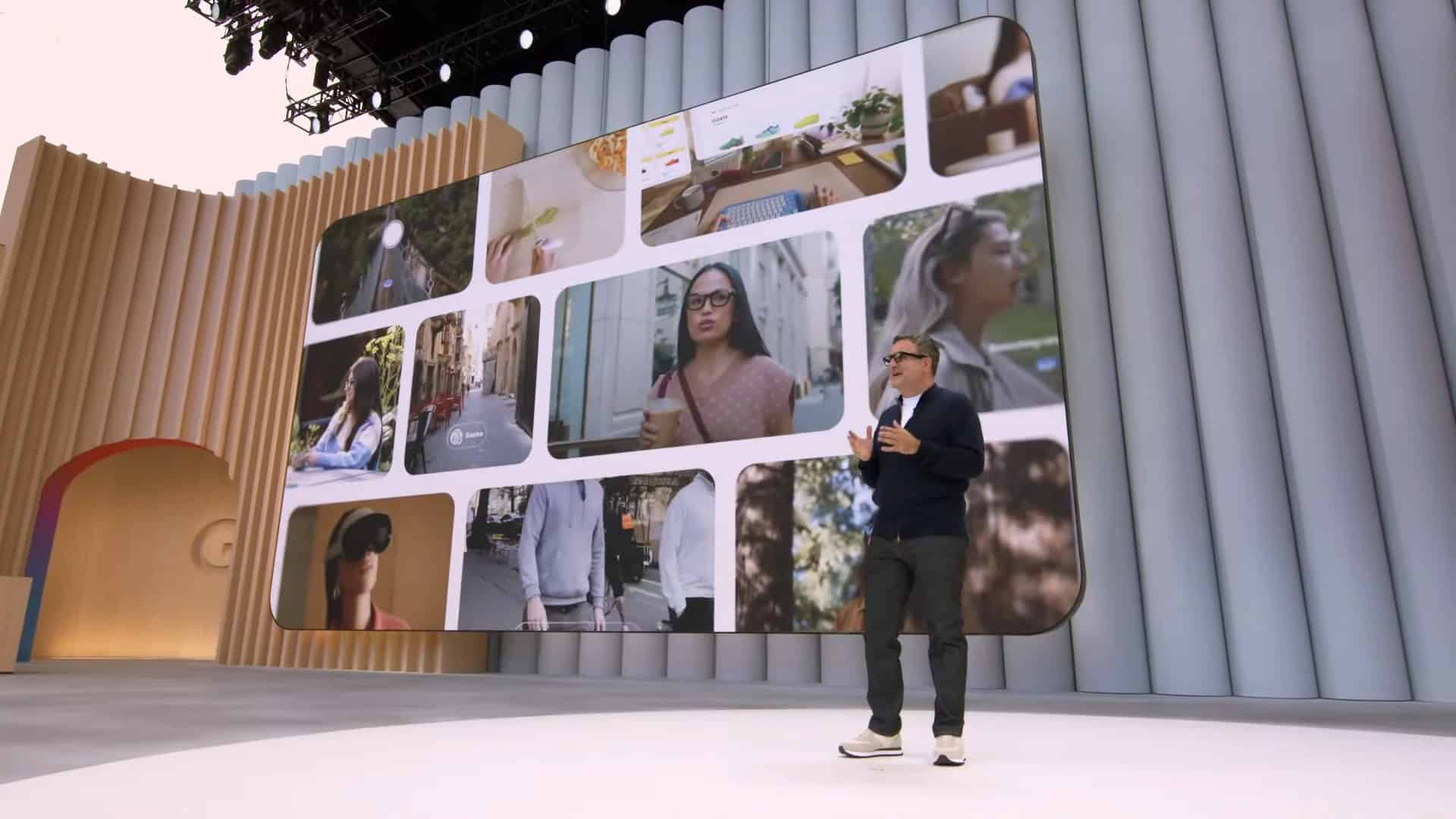
Perhaps the most compelling and forward-looking revelation was the comprehensive rollout of Android XR, Google’s dedicated operating system for extended reality (XR) devices. While headsets were certainly a part of the conversation, the emphasis was undeniably on sleek, everyday smart glasses. Google teased collaborations with fashion-forward brands like Gentle Monster and Warby Parker, signaling a strong push for stylish and wearable AI-powered eyewear. Live demonstrations highlighted capabilities such as real-time language translation appearing directly on the lenses, hands-free navigation, and seamless integration with the user’s digital life. This move marks a significant leap in Google’s ambitions for ubiquitous computing, placing intelligent assistance literally in your line of sight. There were slight hiccups with the demonstration, but as they said, it was risky to show off, and what was ultimately showcased was understandably mindblowing.
Google Search Reimagined with “AI Mode”
Google Search is no longer just about blue links. The company introduced “AI Mode”, an entirely new conversational and agentic experience. This advanced mode allows users to engage in complex, multi-part queries, facilitating deep research with personalised results. A standout feature is “Agent Mode,” powered by Project Mariner, which enables the AI to execute tasks on the user’s behalf – from finding and booking event tickets to making restaurant reservations, all directly within the search interface. The integration of “virtual try-on” for online shopping further demonstrates Google’s commitment to making search an active, rather than passive, experience.
Gemini AI: Everywhere, Smarter, and More Personal
Google’s flagship AI, Gemini, received substantial upgrades and broader integration. Crucially, Gemini Live, featuring camera and screen-sharing capabilities that allow real-time conversations with Gemini about what’s seen on-screen or through the phone’s camera, is now free and rolling out to all Android and iOS users. This move significantly democratizes access to advanced multimodal AI. Google also articulated a vision of Gemini as a “Universal AI Assistant”, designed to understand context and take proactive actions across an ever-expanding range of devices, including smartwatches, cars, and even TVs. New specialised Gemma models like MedGemma (for healthcare) and SignGemma (for sign language translation) further underscore Gemini’s growing versatility.
Generative Media Breakthroughs with Veo 3, Imagen 4, and Flow
Google demonstrated remarkable advancements in its generative AI tools for creative content. Veo 3, the text-to-video model, now boasts native audio generation, enabling users to create videos with integrated sound effects, background noises, and even dialogue – a significant step forward in AI-powered filmmaking. Imagen 4, the text-to-image model, showed improved fidelity, clarity, and text rendering, allowing for more precise and high-quality image creation. Rounding out this suite of tools is Flow, an innovative AI filmmaking tool that combines Veo 3 and Imagen 4, offering comprehensive features for adjusting camera angles, motions, and creating entire scenes from simple text prompts, streamlining the video production workflow.
Google Beam: The Future of Immersive Communication
Formerly known as Project Starline, Google Beam showcased stunning progress in immersive 3D video communication. This technology leverages multiple cameras and a custom light field display to render incredibly realistic 3D representations of callers, aiming to replicate the feeling of in-person interactions. Google announced strategic partnerships with companies like HP, signaling a clear intent to bring this transformative communication tool to enterprise settings.
Google I/O 2025 painted a clear picture of an AI-first future, where intelligence is deeply embedded across all devices and services, with smart glasses poised to become a central interface for interacting with this ever-smarter digital world.
Relive the entirety of Google I/O below.