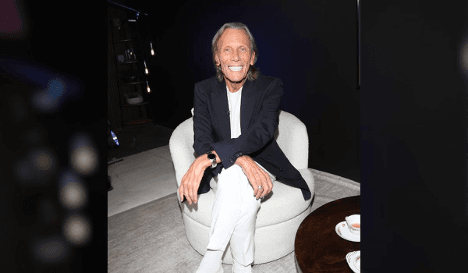
Over five decades, Kenneth W. Welch Jr. has patented technologies, produced theater, navigated geopolitical crises, and engineered media infrastructure that rivals what legacy corporations spend hundreds of millions to assemble. As the CEO of the Global Corporate Machine, he’s operated at the intersection of energy, tourism, entertainment, and global influence long before most people understood those things were connected.
From Houston, Welch runs GCM as a multi-industrial ecosystem spanning sustainable energy, sub-sea engineering, and a global media distribution engine. The concept is simple: control the infrastructure, and you control the outcome.
His instincts showed up early. In 1982, years before the creator economy had a name, Welch helped pioneer what would become the modern infomercial through “Video Vacations,” a broadcast platform that merged travel storytelling with direct consumer activation. At a time when most advertising was passive, Welch built something interactive—a system that didn’t just show people destinations but moved them to act. It was disruptive, it was profitable, and it was a preview of the infrastructure-first thinking that would define his career.
Welch’s background prepared him for operating at scale. He trained as a competitive gymnast, developing the discipline and body awareness that elite athletics demand. He modeled for GQ, learning how presentation and image translate into influence. And he served in the military, where strategic precision and leadership under pressure became second nature. It’s an unusual combination—athlete, model, serviceman—but for Welch, each chapter built toward the same destination: the ability to command attention and execute at the highest levels.
When he moved into theatrical production, those skills converged. Co-producing and directing major stage shows like Lone Star at Galveston’s Mary Moody Northen Amphitheater, Welch developed what he calls the art of “Superstar presentation”—the ability to take raw talent and elevate it into spectacle, to transform a performance into a cultural event that audiences don’t just watch but remember. Theater taught him something that would prove essential later: that talent alone isn’t enough. Talent needs a stage. And someone has to build the stage.
But spectacle was never the end goal. Infrastructure was.
Through Global Oceanic Designs and SeaDog Systems, Welch turned his attention to the ocean—and to the engineering challenges that most companies considered unsolvable. He introduced patented Global Structural Hull Technology, a breakthrough in sub-sea architecture designed for sustainable underwater habitats and deep-sea industries. The technology addresses one of the fundamental problems of ocean development: how to build structures that can withstand immense pressure, corrosive saltwater, and unpredictable currents while remaining economically viable.
His Air & Water Motor—officially known as the Air & Water Energy Recovery Device—earned U.S. Patent No. 5,555,728 and was recognized by Gas Industries Magazine and the Society of Petroleum Engineers, in 1996, as one of the top industrial products of its year. The device represented a new approach to energy recovery, capturing and converting energy that traditional systems simply waste. Alongside the SeaDog Wave Pump, a dam-free hydropower system that harnesses wave motion without the ecological disruption of conventional hydropower, these technologies form the backbone of Welch’s long-term vision: reducing humanity’s dependence on fossil fuels through superior mechanical efficiency and clean, renewable energy.
It’s a portfolio that most entrepreneurs would consider a life’s work. For Welch, it was one chapter.
He has also operated in arenas most executives never see—and most would prefer to avoid. His work has included strategic interventions connected to China’s rare-earth materials markets, where control of critical minerals has become a flashpoint in global competition. He engaged in direct action addressing the global fentanyl crisis, efforts that placed him at the center of international policy conversations during moments of genuine humanitarian and geopolitical urgency. These weren’t business ventures in the traditional sense. They were responses to problems that required someone willing to operate in complexity, ambiguity, and high stakes.
From these experiences—from theater to engineering to geopolitics—Welch developed PIE: Perception, Imagination, and Extrapolation. It’s his core strategic framework, and it runs through everything GCM does. The model is built on a simple premise: the future isn’t predicted, it’s engineered. Perception shapes how people see the world and, therefore, how they behave. Imagination defines the boundaries of what’s considered possible. Extrapolation is the discipline of taking that vision and turning it into executable reality—step by step, system by system. For Welch, strategy isn’t about reacting to the future. It’s about constructing it.
Now, he’s applying that framework to media—and to what he sees as the next great frontier of power.
GCM’s entertainment arm, Moxie Media Marketing, operates a tens-of-millions-dollar omni-channel distribution engine spanning Facebook, YouTube, Instagram, TikTok, and X. This isn’t a content studio hoping for virality or chasing trends. It’s infrastructure—designed to manufacture cultural momentum at scale and, more importantly, to give artists leverage in an industry that has historically done everything possible to extract it from them.
The entertainment industry’s traditional model is well known: labels and studios provide access to distribution in exchange for ownership, control, and the lion’s share of revenue. Artists, especially independent ones, have always faced an impossible bargain—give up your rights or stay invisible. Welch built Moxie Media Marketing to break that equation.
At the center of this effort is the Global Talent Billboard Directory (GTBD), a platform Welch designed as a premium stage for musicians, artists, models, performers, dancers, writers, and actors from around the world. For an annual membership, creators gain access to global visibility through Welch’s international network of executives, investors, and brand leaders—the kind of exposure that used to require signing away your future.
The difference is in the structure. Artists retain 100% ownership of their work. Rights stay with the creator. Revenue flows back to the talent. Exposure is no longer traded for intellectual property. It’s infrastructure, not extraction—a model that treats creators as clients to be elevated, not as resources to be mined.
The model was stress-tested in 2025, and it delivered.
Over a 120-day strategic window, GCM and Moxie Media Marketing executed a sustained global campaign that culminated in a 1st Place Regional and 12th Place Global finish at TikTok LIVE Fest—one of the most competitive livestreaming events in the world. The campaign wasn’t a single viral moment or a lucky break. It was a coordinated offensive built on high-velocity content, platform synchronization across multiple channels, and real-time audience mobilization. Every piece was designed to reinforce the others.
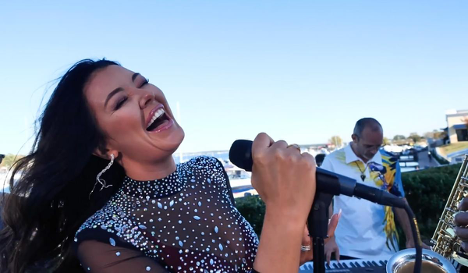
Singer-songwriter Jolene Burns anchored the creative effort, delivering performances that became the visual and emotional backbone of the campaign. Her renditions of “Hello,” “Creep,” and “A Beautiful Heart” showcased both range and presence, while “Something’s Changed“—a collaboration with UK rapper S-2—demonstrated the cross-genre, international reach that Moxie’s infrastructure makes possible. Burns wasn’t just a performer in the campaign; she was proof of concept.
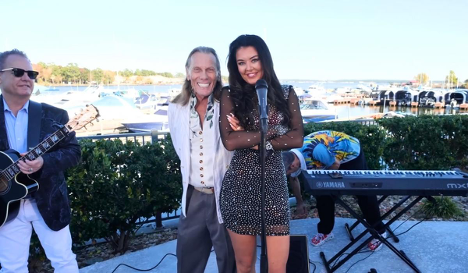
Running parallel to the TikTok push, a focused YouTube growth initiative produced results that most channels spend years trying to achieve: on a $30,000 marketing budget, the content generated more than 270 million views and 497,000 new subscribers within a 33-day window. By any industry measure, those numbers are exceptional—cost-per-subscriber rates that would make most digital marketing teams rethink their entire strategy.
As 2025 closed, the campaign transitioned into something more permanent: the release of “Can’t Control Me,” an original anthem written and performed by Burns with music produced by Moxie Media Marketing. The track served as both a creative milestone and a statement of intent—a declaration that independent artists, backed by the right infrastructure, can compete at the highest levels without surrendering what makes them independent in the first place.
For Welch, the Live Fest campaign wasn’t a finish line. It was validation. Proof that the model works. Evidence that infrastructure, not just talent, determines who wins in modern media.
The Global Corporate Machine now stands as a multi-industrial ecosystem linking SeaDog Systems, Global Oceanic Designs, and Moxie Media Marketing into a unified platform designed for global scale. Sustainable energy, sub-sea engineering, geopolitics, and entertainment aren’t separate ventures operating under a shared logo. They’re interconnected expressions of a single philosophy: that power belongs to the shared community who build the systems for the benefit of others who depend on them. Whether those systems move water, generate energy, or distribute content, the underlying logic is the same.
As 2026 opens, Welch and GCM are rolling out the next phase of what he calls the New Earth media economy—a world where independent creators operate with institutional reach, where ownership is protected by design rather than negotiated away by necessity, and where global influence is no longer reserved for legacy labels and the artists willing to play by their rules.
The premiere of this next chapter is set where Welch believes modern careers are now decided: on the Moxie Media Marketing YouTube channel, where performance, distribution, and momentum converge in public view. It’s a bet on the platform, on the model, and on the idea that the old ways of building stars have already started to collapse.
For Kenneth W. Welch Jr., that collapse isn’t a problem. It’s an opportunity. And he’s been building toward it for fifty years.