The payout animation is the most widely viewed piece of digital art in the country, and nobody treats it as art at all.
That sounds like a provocation. It is closer to an accounting exercise. Add up the number of times a coin cascade, a light sweep and a rising number play out on Filipino phones on any given evening, and you are looking at a volume of viewing that no gallery show, music video or brand campaign in Manila comes close to matching. It is seen constantly, discussed almost never, and credited to nobody.
Which is a shame, because as a piece of design it is doing something genuinely interesting. And a handful of Filipino digital artists have started pulling it apart.
The Payout Moment as a Piece of Design
Strip the payout sequence down and it is a tightly engineered bit of theatre with a fixed job: make a number arriving feel like an event.
The techniques are borrowed, mostly from arcade cabinets and mobile games. Sound rises before the visual resolves. The number counts up rather than appearing, which stretches a single instant into two or three seconds of anticipation. Light moves outward from the centre. Symbols hold still while everything around them animates, so your eye has nowhere else to go.
None of this is accidental, and none of it is new. It is the same grammar that keeps players engaged in slot interfaces generally, which CULTR has looked at before in the context of the design elements that keep online slot players active. What is new is who is now studying it.
Philippine creative studios have spent years producing art assets for overseas games, animation and advertising. That work built up a large pool of designers who understand reward feedback loops from the inside, as a craft brief rather than as a moral question. Some of them have started making their own work about it.
The Payout Number Behind the Picture
Here is the tension that makes the subject worth an artist’s attention. All that visual excitement is wrapped around a figure that is almost completely flat.
Look into how casino payout rates are calculated for Philippine players and you find the published averages clustered in a narrow band, roughly 94 to 97 percent, with the top of the market sitting a shade above 97. The spread between the best and worst is a couple of percentage points. No amount of art direction moves that number. The animation is not describing your outcome, it is decorating a constant.
That is a properly odd thing for a designer to sit with. You are commissioned to make a mathematically fixed ratio feel like a personal event. The picture and the number are pulling in opposite directions, and the picture wins on attention every single time.
The figures themselves are not folklore, incidentally. Independent labs handle that verification: eCOGRA runs RNG and RTP testing as a named service line, which is the mechanism by which a percentage on a marketing page becomes an audited claim rather than a promise.
What Philippine Designers Are Doing With It
The interesting responses are not the obvious ones. Nobody serious is making anti gambling posters.
What is happening instead is closer to formal analysis. Artists are isolating the payout sequence from its context and letting it run without a game attached, so you watch the mechanism rather than the outcome. Slow it down and the celebration reads as slightly absurd. Loop it and it becomes hypnotic in a way that stops feeling celebratory around the fourth repetition. Remove the number entirely and you are left with pure reward choreography, a gesture with nothing behind it.
That is a legitimate artistic strategy and it has good precedent. Isolating a commercial visual language from its commercial function is roughly what pop art did with packaging.
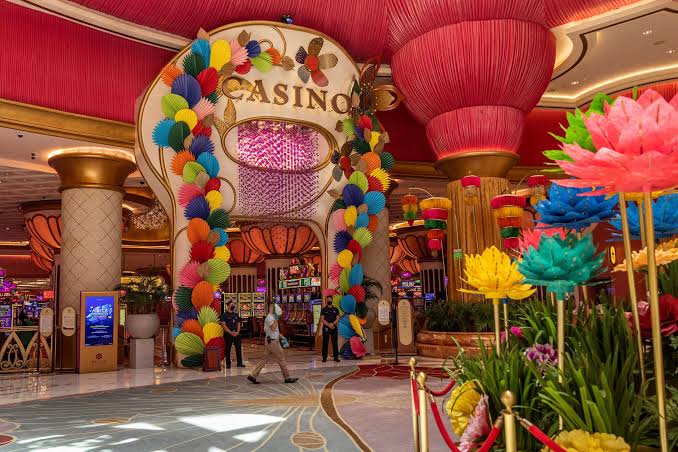
There is also a specifically Filipino angle here that outsiders miss. This is a market where the same visual vocabulary shows up in jeepney lettering, sari sari store signage and fiesta lighting, all of which use maximalist colour and ornament to signal abundance. The payout screen did not invent that grammar for the Philippines. It imported a local one and monetised it. Some of the more thoughtful work being made is about that borrowing rather than about gambling as such.
Why the Aesthetic Keeps Winning
None of this criticism has dented the thing being criticised, and it will not.
The payout moment survives analysis because it is not making an argument. It is making a feeling, and feelings are not refutable by a percentage. You can know the audited figure, understand the mechanism, watch an artist take it apart in a gallery, and still get the small lift when the coins fall. Knowing how a magic trick works has never stopped it from working.
Which is the honest reason to take the imagery seriously as design. It is effective on people who fully understand it, and that is rare enough to be worth studying. Play remains adult entertainment, 21 and over in the Philippine market, and it is worth keeping straight that the animation is selling a mood rather than a return.
The best of the new work does not moralise about any of that. It just makes you watch the mechanism for longer than the mechanism was built to survive.