A spooky home should feel atmospheric, safe, and comfortable for everyone inside it. The most effective displays rely on contrast, spacing, and controlled sensory details rather than piles of props. Excessive objects can obstruct walkways, overwhelm smaller rooms, and reduce the impact of memorable features. A few well-placed pieces often leave a stronger impression than a room filled with props.
With a measured plan, homeowners can create an eerie setting that supports conversation, movement, and seasonal enjoyment without making ordinary routines more difficult. Choosing the right Halloween decoration early on helps set a clear direction and avoids impulse purchases that clutter the space. The ideas below cover practical ways to build that balance room by room.
Choose a Visual Direction
A clear visual plan helps prevent clutter. Before purchasing anything, homeowners can review a broad selection to compare dimensions, textures, lighting styles, and themes. That early review makes later decisions easier. One room might use shadowy silhouettes, while another relies on pumpkins, dried foliage, or aged wood. Each area benefits from a dominant mood and a limited number of supporting pieces.
Control the Color Scheme
Black, ivory, charcoal, and burnt orange create a familiar autumn atmosphere. A restrained accent, such as moss green or dark wine, adds depth without making the room feel garish. Repeating two or three shades across connected spaces creates visual continuity. Bright tones deserve careful placement, particularly near seating, entryways, and dining surfaces, where they can quickly dominate the eye.
Repeat Key Details
Small repeated elements can connect separate rooms. Bats, paper leaves, antique-style frames, or candle holders may appear in several locations without taking over the decor. Repeated shapes create recognition, while varied sizes keep the arrangement from looking copied. Finish also matters. Matte materials suit aged furniture, whereas reflective surfaces work better as isolated accents.
Shape the Entryway
The entrance sets expectations before guests reach the main living area. A wreath, porch sign, or pumpkin grouping can frame the door while leaving the threshold clear. One tall figure may add height beside the steps. Low lanterns or planters can guide visitors along the path. Keeping decorations clear of open flames or heat sources reduces potential fire hazards. Clear footing remains essential during evening gatherings, deliveries, and trick-or-treating.
Create Indoor Layers
Indoor styling gains interest from varied height. A bowl containing faux spiders can occupy a coffee table, while framed artwork or hanging bats draw attention upward. Mantels and consoles usually need one central feature, supported by smaller objects placed with space between them. Open areas around each group preserve function and prevent furniture from appearing buried beneath decorations.
Use Light Carefully
Light often shapes mood more effectively than a large prop. Warm bulbs can soften a dark corner, while a muted red or green glow may create tension near a window. Battery-operated candles suit shelves and mantels because they eliminate exposed flames. Timers simplify evening routines. Lower brightness also protects visual comfort, especially during long gatherings or meals.
Give the Yard One Focus
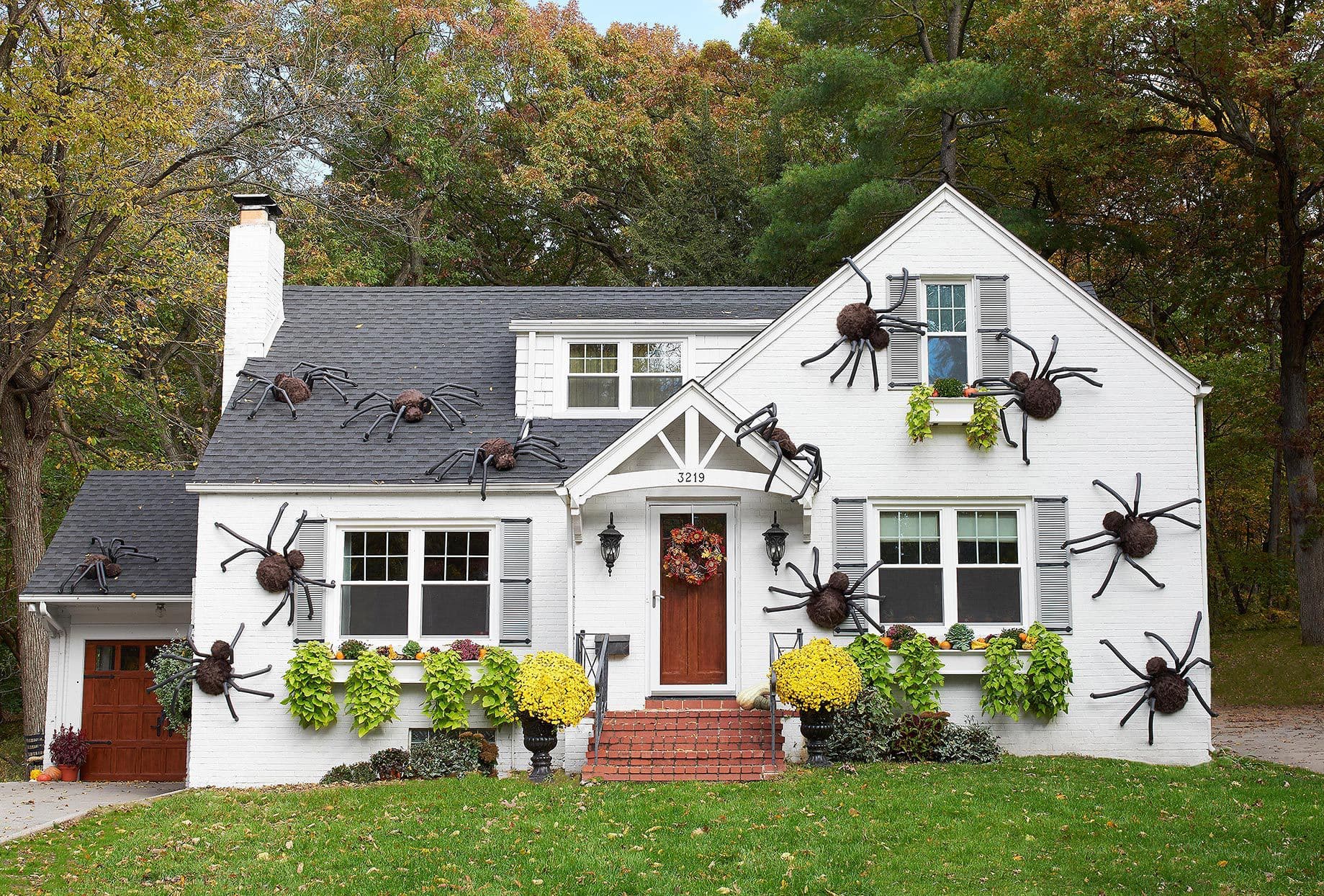
Outdoor displays benefit from a strong focal feature. A graveyard arrangement, oversized figure, or pumpkin cluster can anchor the lawn from the street. Smaller pieces should reinforce that subject rather than compete for attention. Adequate spacing improves recognition after sunset. Weather-resistant materials, stable bases, and secure fasteners also help prevent damage during wind or rain.
Balance Scary and Welcoming
A frightening setting can remain warm enough for conversation. Soft blankets, ordinary seating, and natural autumn textures offset darker figures or unusual sounds. Families with young children may prefer friendly ghosts, smiling pumpkins, and gentle movement. Adults seeking greater tension can position scarier pieces near corridors or distant corners, allowing suspense to build without disturbing shared spaces.
Plan for Safety
Every object needs a practical location. Cords require secure coverage, inflatables need proper anchoring, and loose fabric must stay away from walking paths. Decorations should remain clear of heaters, vents, candles, and fireplaces. Outdoor electrical products require weather-rated connections and protected outlets. A short inspection after sunset can reveal shadows, unstable stands, or trip hazards that daylight conceals.
Check Guest Movement
Hosts should walk through the property as a visitor would. That simple test may reveal blocked doors, sharp edges, unstable platforms, or awkward furniture placement. Children and pets often encounter hazards adults overlook because their height and movement patterns differ. Removing one attractive item can improve visibility, circulation, and comfort throughout the evening.
Edit the Display
Once setup is complete, homeowners should inspect each area from several viewpoints. A crowded shelf may need fewer objects, while an empty corner could benefit from one well-chosen feature. Removing weak pieces gives stronger elements greater presence. Negative space also creates contrast, allowing shadows and lighting effects to register clearly. The finished arrangement should appear intentional, not packed by habit.
Conclusion
Creating a spooky home does not require frightening objects in every corner. A controlled palette, measured lighting, thoughtful spacing, and secure placement can produce a memorable seasonal setting. Each feature should support a purpose, whether it welcomes visitors, builds suspense, or adds autumn character. By selecting fewer pieces and positioning them with care, homeowners can create drama without sacrificing safety, comfort, or the practical needs of everyday living.