There are blockbuster films… There are prestige dramas… And then, there are cinematic EVENTS.
Long before audiences had even taken their seat, The Odyssey was dominating conversation, sandwiched between controversy and artistry. Making history as the first feature EVER to be entirely shot with IMAX cameras, (using 2.1 million feet of film tape – longer than the distance between Toronto and New York!), Sir Christopher Nolan‘s first foray to the silver screen since 2023’s ‘Oppenheimer’ has garnered critique from salty movie-goers, angered by the paltry amount of cinemas (just 41 screens across the globe) that can show the movie in the way Nolan intended, on glorious 70mm IMAX screens. For everybody else, the version being shown in regular (non-IMAX) cinemas features cropped aspect ratio, often missing key detailing.
So, with Nolan‘s spot as cinema’s modern-day Da Vinci firmly cemented, why exclude so many millions of fans, in this way? Snobbery, argue the masses. But the reasons behind this decision, run far deeper…
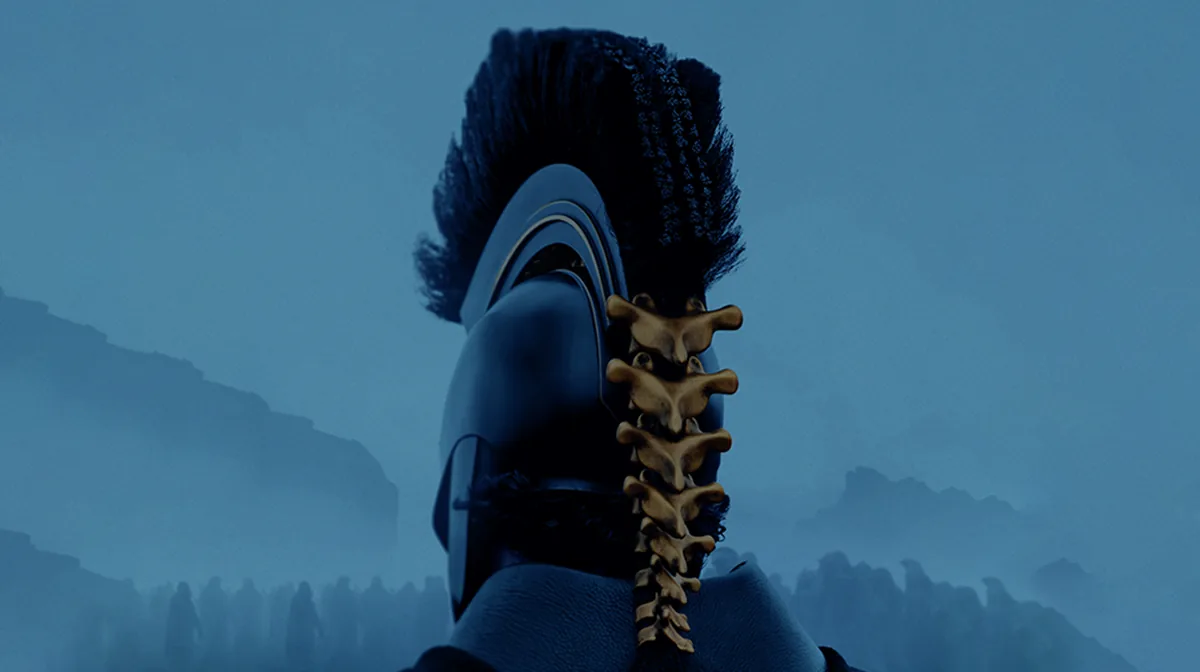
“The headline, for me, is by shooting on IMAX 70 mm film, you’re really letting the screen disappear. You’re getting a feeling of 3D without the glasses,” explains the double-Academy Award winning Director. “This is the first time we’ve ever been able to go to IMAX and say, ‘This is the Odyssey.’ If ever there were a film you were going to do the whole thing on IMAX, this would be the one to do it.”
The Brit’s penchant for analog film and the ability to mimic human vision, resulting in unmatched sharpness and depth, is not lost on 22-year-old film graduate, Christian Campbell. Much like Odysseus himself, who made his name by embarking on a perilous journey from Troy to Ithaca, Campbell travelled more than 4,000 miles to see the Greek king’s epic fable on the big screen London’s BFI IMAX. The 22-year-old film graduate, who aspires to be an editor, made the journey from Atlanta to London to watch Nolan’s take on Homer’s epic poem, buying his ticket for the film’s first midnight showing at Britain’s largest screen, a full year in advance. “I had originally planned on going to New York”, he chuckles. “But when the tickets dropped, they sold out immediately, and the same in Georgia. I was like, the third best option is London.”
Such commitment from Nolan-ites, is not unheard of, such is the stellar discography of the Westminster-born director’s career to date, amid a glittering CV which includes: TENET (2020), Dunkirk (2017), Interstellar (2014), Inception (2010), The Prestige (2006), Memento (2020) and The Dark Knight trilogy (2006/2008/2012); the latter a key reason behind his knighthood for services to film, in 2024. But the unwavering hunt for perfection comes from a place of sacrifice. Each IMAX camera weighs 180kg and Nolan was forced to work with IMAX directly to develop a soundproofing “blimp” to make it quiet enough for him to record dialogue on the heavy-duty cameras for the first time. While this has certainly not hemmed the films’s huge $250m (£186m) budget, the end result is worth the labour of love.
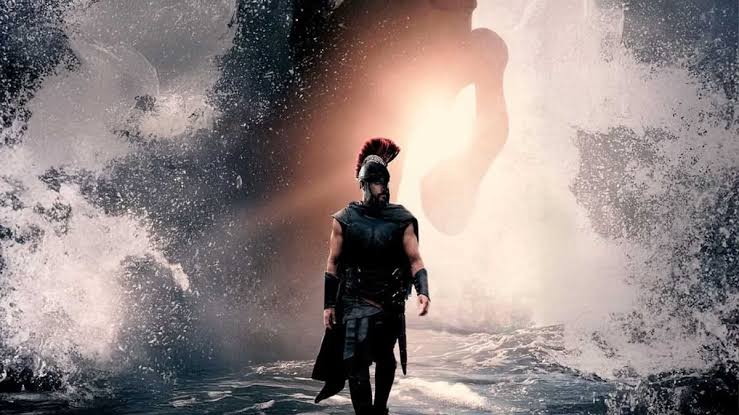
Matt Damon proves an inspired choice in the lead role. Rather than playing Odysseus as an untouchable mythical hero, Damon grounds him in exhaustion. This is a man who has survived war but struggles to survive peace, with every decision carrying unbearable weight. Every victory comes with another compromise, and there are moments where he says very little, yet communicates everything through tired eyes and restrained body language. It’s a performance built less on grand speeches than quiet resilience, and the film is all the better for it. Much like DiCaprio‘s Cobb trying to distinguish dreams from reality in Inception, or McConaughey‘s Cooper searching across galaxies to reconnect with his family in Interstellar, Nolan has always been fascinated by people carrying impossible burdens. Odysseus simply happens to be the oldest, and boldest, of them all.
Around him, the supporting cast is predictably excellent. Zendaya and Robert Pattison once again unite on screen following The Drama earlier this year, with the latter delivering a deliciously devilish performance at almost Joffrey Baratheon-levels of ‘love to hate ’em’, whilst nerds amongst the crowd will also pinpoint the moment we end up with Jason Bourne, Batman, Spider-Man, and Catwoman all sharing the same screen, thanks to the inclusion(s) of Tom Holland, and Anne Hathaway. The former, adds the beauty of yearning, in the role of Telemachus, a forlorn son awaiting his father’s return amid a home full of sleazy bullies who attempt to intimidate the rightful heir to the throne. But it is Hathaway, who dominates the screen through every scene of her inclusion as Penelope (which amasses a generous 50% of the movie’s near-3 hour run-time), thanks to her powerful femininity amid a steely core of defiance.
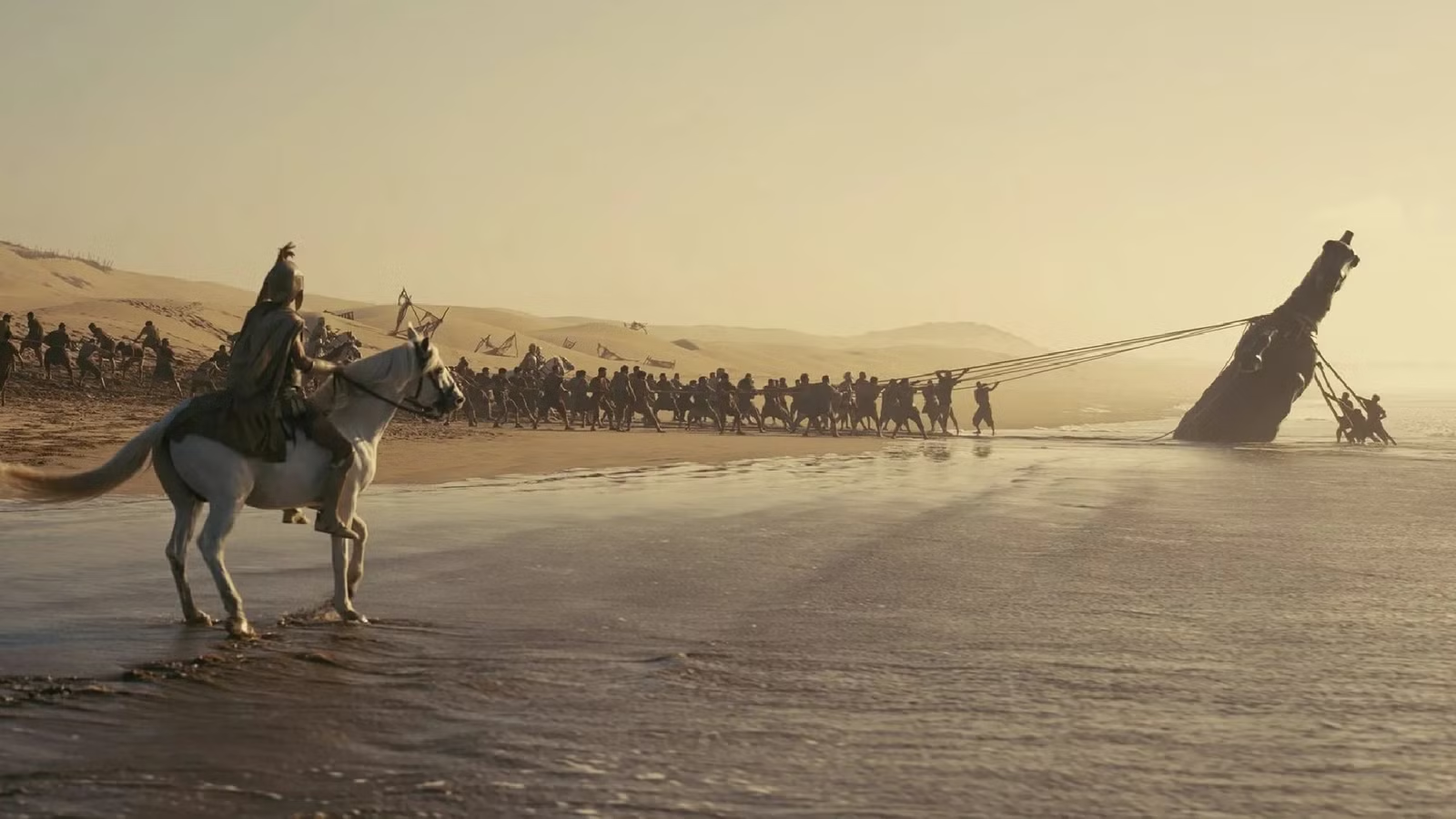
And yet, the Oscar-level casting is not even the movie’s piece-de-resistance. Visually, The Odyssey is extraordinary. The scale achieved here borders on overwhelming. Vast coastlines stretch endlessly towards unforgiving horizons. Towering kingdoms appear carved from legend itself. Oceans shift from tranquil beauty to terrifying force in the space of a heartbeat. The landscapes aren’t simply beautiful—they constantly reinforce how insignificant even the greatest heroes become when faced with nature, fate and time. Watching it unfold on the biggest screen possible feels less like consuming entertainment and more like attending an event. It’s the cinematic equivalent of standing inside a cathedral or hearing a full orchestra perform live. You can admire photographs afterwards, but they never truly capture the experience.
Ludwig Göransson deserves enormous credit, too. His score swells and soars in unison, but never overwhelms the film despite possessing remarkable power in the mould of Hans Zimmer, Nolan’s previous accomplice when it came to soundtracking his most epic of creations. Here, Göransson (whose own résumé is now glowing with the likes of Creed, Black Panther, Sinners, Venom, and The Mandalorian) surges forward with thunderous intensity; while at times, retreating almost completely, allowing silence to become its own instrument. It’s another reminder that modern blockbuster film-making doesn’t always need to shout to command attention, but when the moment calls for it, Göransson springs into life, delivering one of the most pulsating and frenetic finales during a typically-Nolan final third, where madness culminates to tie up several plot-lines in a web of chaos, all perfectly gift-wrapped for gasping audiences.
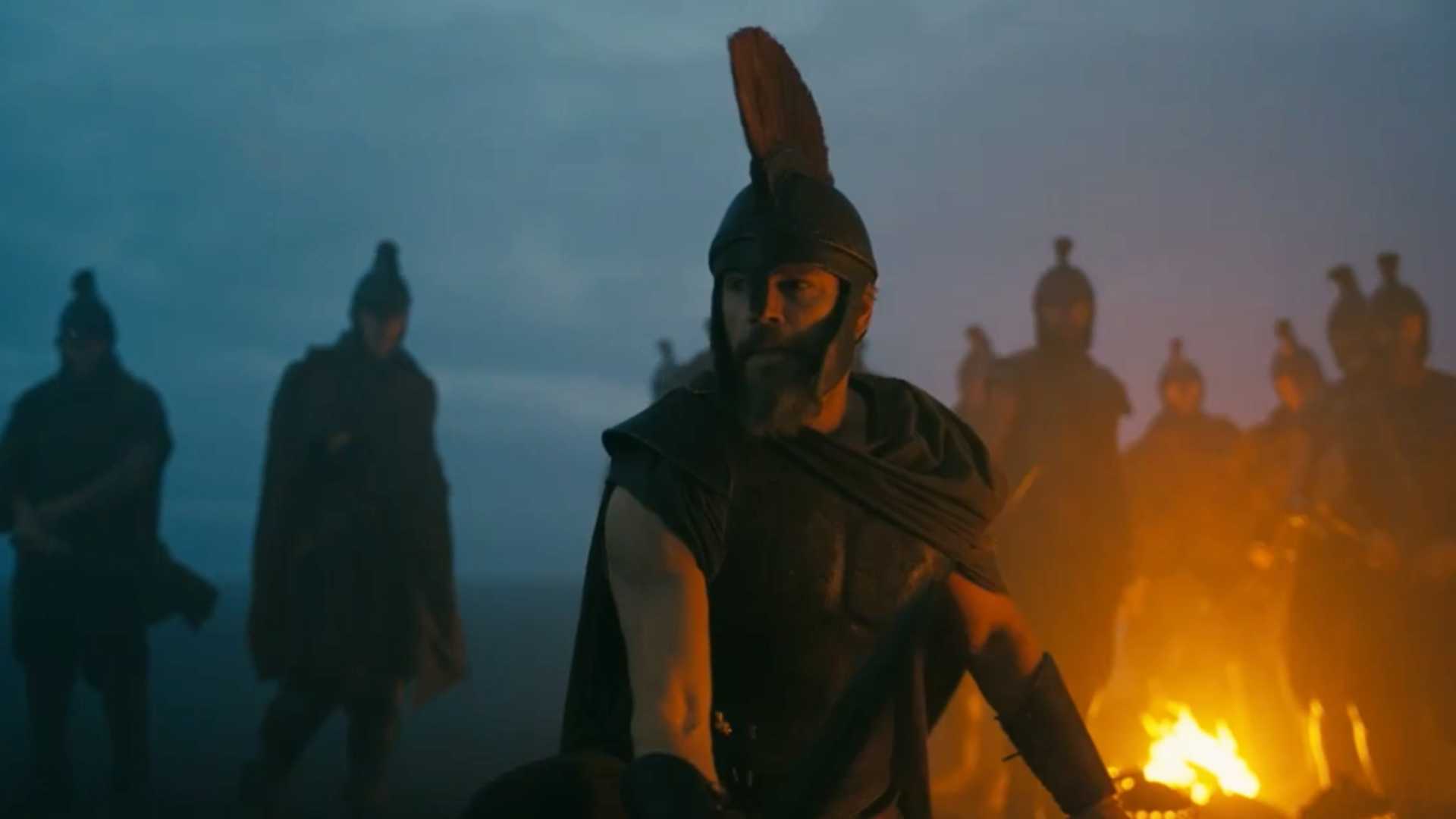
Clocking in at close to three hours, there are moments where the narrative threatens to buckle under the sheer weight of its ambition. Homer’s poem spans years, countless locations and an enormous cast of characters. Compressing that into a single feature inevitably means a handful of supporting players disappear almost as quickly as they arrive. There’s also the small matter of Nolan being unapologetically Nolan. His storytelling still demands concentration. He trusts audiences to connect dots rather than drawing line between them. Some viewers will relish that challenge. Others may occasionally find themselves wishing for just a little more breathing room. The film rarely pauses to explain itself, preferring instead to keep moving relentlessly towards its destination. If anything, we’re overdue more films that expect audiences to lean forward rather than switch off. Whether you agree with every creative decision almost becomes secondary, and that, perhaps, is Christopher Nolan’s greatest gift. He reminds us that cinema can still aspire to be monumental.
As the credits roll, fans of The Odyssey won’t leave thinking about visual effects budgets, opening weekend projections or awards campaigns. They’ll think about journeys, evolution of characters, and the strange ways we all drift from the people we once were. They’ll think about how difficult it is to return home after life has changed us, and how every generation seems to rediscover that truth through different stories. The ancient Greeks understood it. Homer understood it. Christopher Nolan understands it too. The Odyssey stands comfortably among his most ambitious achievements. It challenges, overwhelms and occasionally exhausts in equal measure, yet it never loses sight of the emotional heart beating beneath all the myth and spectacle. In an age where so much blockbuster filmmaking feels designed by algorithm, that’s something worth celebrating. Some productions require booking the luxury seats, or a pre-cinema supermarket trip to amass enough movie-snacks to feed a small family throughout.
And sometimes… The longest road really does lead to the most rewarding destination.