Jake Gable — CULTR
There are few places in Britain where the weight of musical history feels quite so tangible as Wembley Stadium. This is, after all, the patch of north-west London where Freddie Mercury once turned 72,000 people into a single, screaming organism with Queen at Live Aid; and where Michael Jackson subsequently brought his Bad tour to the old stadium’s Twin Towers in 1988; long before the newly erected LED arch (2007). For generations, music fans have watched their heroes graduate from household names to something approaching mythology within these curved walls. And now, there is The Weeknd.
The ego has landed, and who can blame him? Abel Tesfaye has teased this as the last ever tour under his ‘Weeknd’ moniker, as he looks to take his vivaciously dark and delicious artistic vision to new future levels, with ‘After Hours til Dawn’ now spanning the final leg of a remarkable 4-year global run. Such is the Canadian’s stardom, that Wembley Stadium even agreed to shunt the likes of Erling Haaland & Bukayo Saka out to Cardiff to play out English footballer’s traditional first cup final of the season. This pitch is now the Weeknd’s, and nobody is budging him.
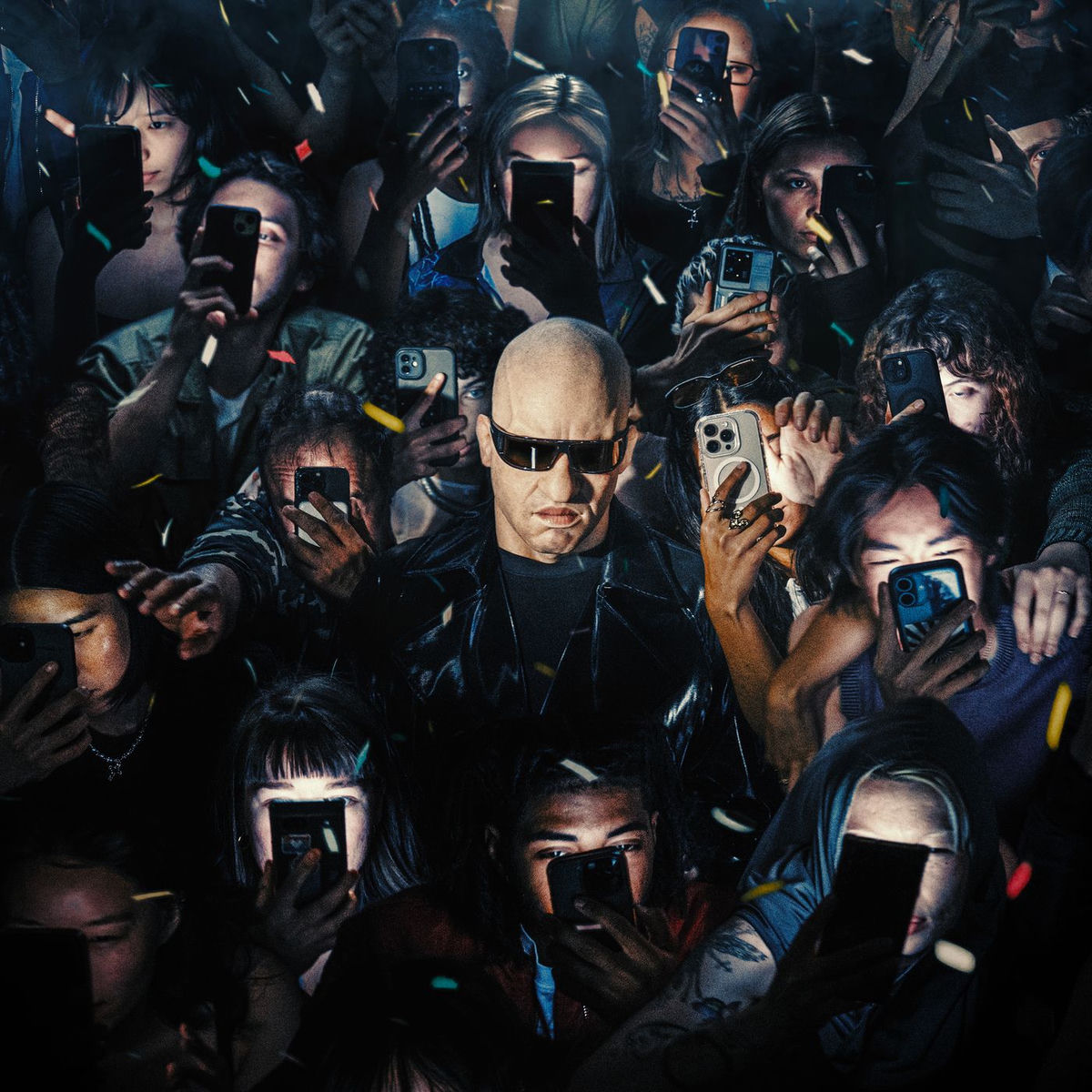
But before the screams of the young (often very young) and predominantly female crowd, could scream seismically for Abel, phones tightly grasped and g-strings sufficiently dampened by the sheer number of Weeknd tracks which likely make an appearance in their questionably titled Spotify playlists (no, really. One had devoted an entire selection to him, named ‘Cervix Ticklers’), the hunt was on to find the location of Wembley’s biggest unwritten rule: black boots. Upon gaze in every direction were variations on the same uniform — black leather boots, in cow-girl or knee-high variety, topped with dark ‘XO’ clothing, glossy hair, immaculate make-up, and thousands of concealer-smudged iPhone cameras in desperate need of a cleanse (welcome to the secret ingredient in Gen Z’s blurry amateur videographer tutorial). One artist who could evidently care less about this crucial sartorial decree was the enigmatic Prince 85.
The French producer, billed as a ‘humanoid-looking alien’ had the unenviable task of warming up Wembley — although calling his music a mere ‘warm-up’ feels like labelling the opening sequence of Blade Runner as a screensaver. The elusive electronic artist has built a reputation around strange, cinematic combinations of French Touch, rave, retro-futurism and sci-fi electronics, and his presence makes considerable sense within The Weeknd’s increasingly nocturnal sonic universe. Rather than attempting to bludgeon the stadium into submission, Prince 85 established an atmospheric, and eerie world of his own, to much aplomb. Synths shimmered, rhythms throbbed and the soundscape seemed to exist somewhere between an abandoned Paris nightclub and the control room of a spaceship that had just discovered Discovery. It was a suitably left-field opening statement from a man many have speculated could well be a masked alias of Abel, himself. Either way, the sensational nature of the Prince 85 performance, coupled with Playboi Carti‘s brief showing before the lights finally dropped, left Wembley on the verge of aural euphoria.
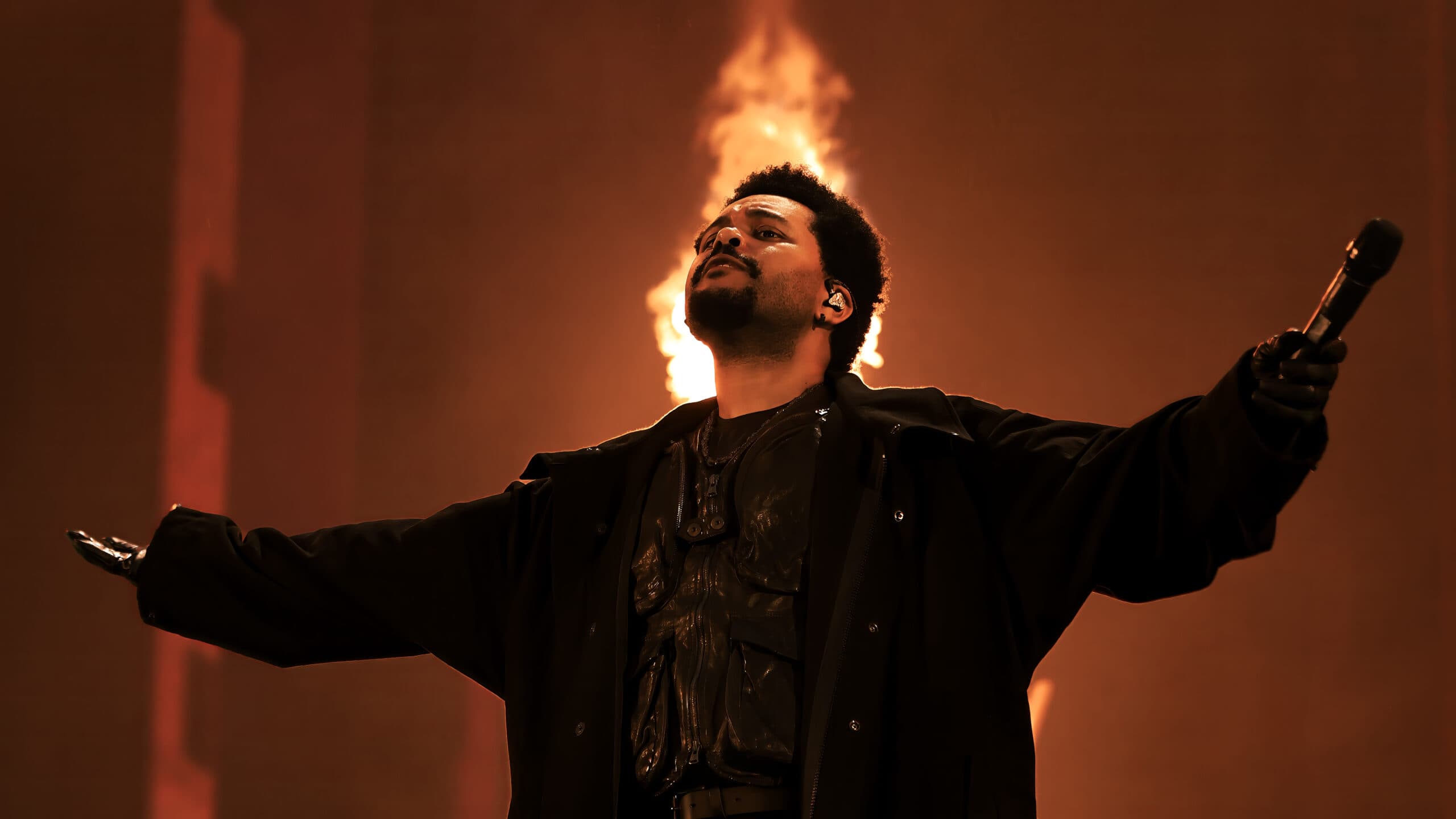
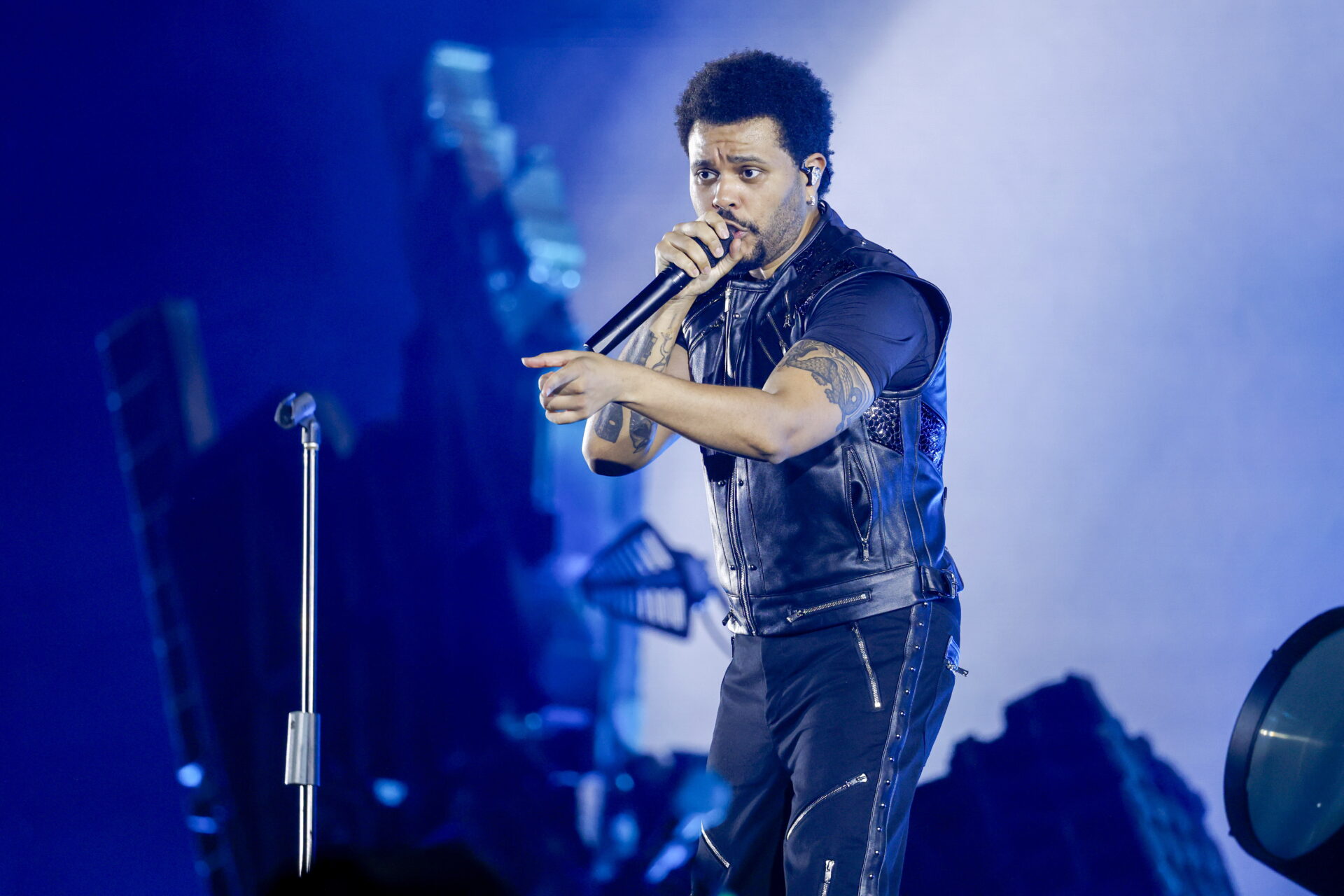
The scream, was deafening. It is worth remembering that Tesfaye is now 36. To the younger end of this audience, that is approximately ancient. Old enough to have been their embarrassing older cousin. Potentially old enough, in some cases, to be their Father. Yet when the first notes landed, the age gap became irrelevant, and Dad soon turned to Daddy. The Weeknd has spent more than a decade making music that sounds as though it was designed specifically for 2am, bad decisions and the morning-after emotional autopsy. His songs have always existed somewhere between the nightclub, the bedroom and the therapist’s office. Tonight, all three were represented. In fact, the genius of the After Hours Til Dawn show is that it doesn’t try to disguise this contradiction. Instead, it magnifies it. The stage itself is colossal: a sprawling cross-shaped runway penetrating deep into the standing crowd, surrounded by an immense visual architecture of ruined cityscapes, smoke, lasers, fire and LED screens. The current production has developed into a dystopian metropolis in various stages of collapse — a visual metaphor that could either be interpreted as an elaborate commentary on celebrity, mortality and excess, or simply the darker, more cinematic world of Hurry Up Tomorrow, before the show begins travelling backwards through the labyrinth of his career.
Then comes ‘After Hours’. Then ‘Starboy’. Then ‘Heartless’. Then ‘Faith’. This is where the sheer depth of The Weeknd’s catalogue becomes apparent. He has reached the slightly absurd stage of his career where songs that once represented the pinnacle of a particular era can now be deployed as supporting characters in a much larger narrative. ‘Take My Breath’ transforms the stadium into an enormous nightclub. ‘Can’t Feel My Face’ detonates with the familiarity of a greatest-hits show., before ‘The Hills’ drags everybody back into the murkier, more dangerous side of the Tesfaye mythology. There is something quite extraordinary about watching an artist who spent his early career cultivating anonymity now command one of the biggest stages in Europe. The Weeknd persona was originally built on mystery: dark rooms, grainy videos, anonymous mixtapes and an almost pathological refusal to explain himself. Now that same character is standing in front of an audience approaching the population of an entire city, surrounded by lasers and enormous screens, while 90,000 people scream his name.
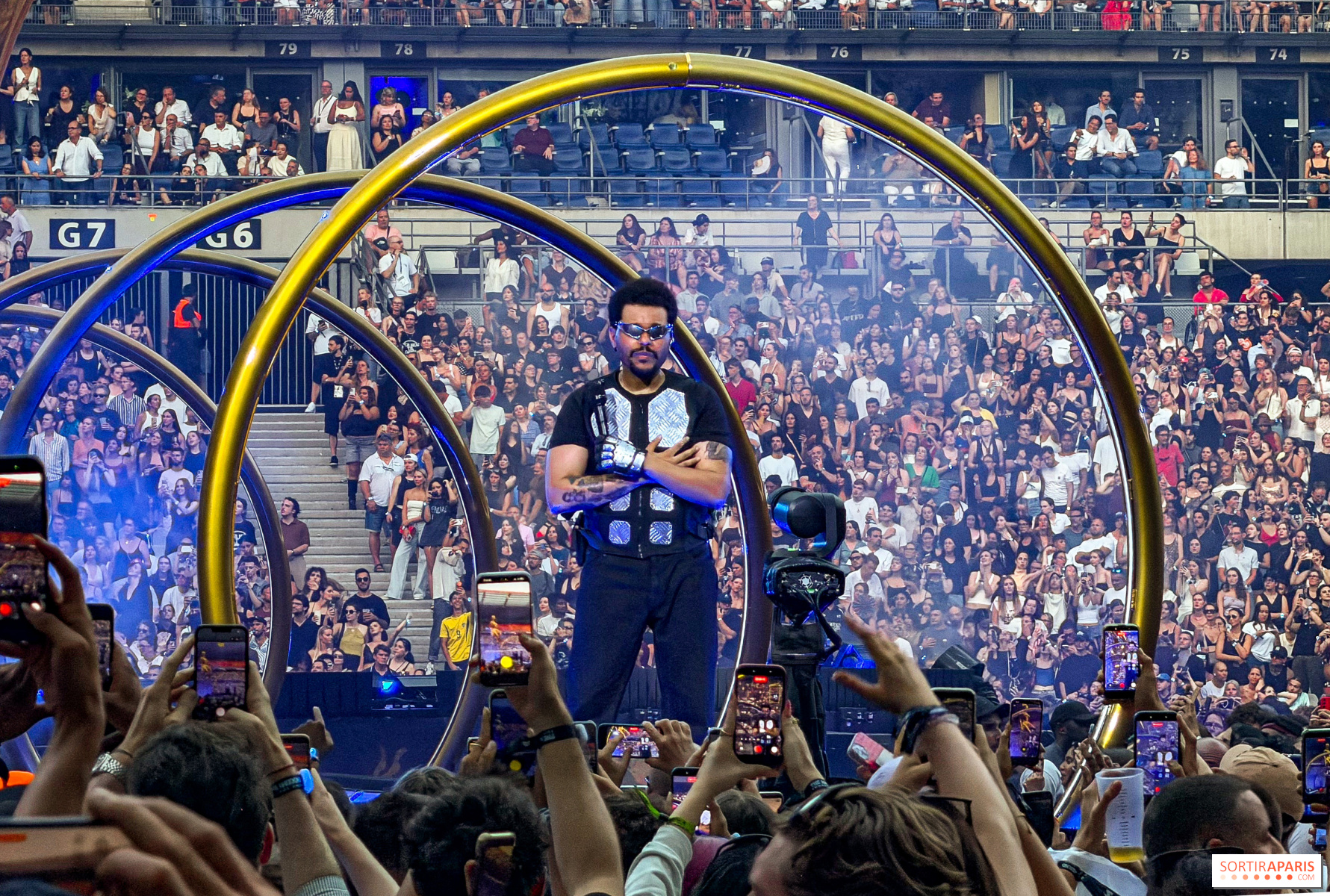
Vocally, Tesfaye remains one of the more distinctive voices in contemporary pop. That unmistakable falsetto cuts through the enormity of the production, but crucially he doesn’t need to spend the entire evening demonstrating vocal gymnastics. His greatest weapon is atmosphere. He knows when to lean into a note, and when to let the production carry the weight. And he understands that in a stadium, sometimes the most powerful thing an artist can do is simply stand there and allow 90,000 people to sing the song for him. The most interesting thing, though, is how little the show feels like nostalgia. Despite drawing heavily from After Hours, Dawn FM, Beauty Behind the Madness, Starboy and even the foundational House of Balloons material, this isn’t a victory lap. It feels like a coronation. The Weeknd has reached that rarefied level where his past is no longer something he has to revisit. Every stylistic incarnation — the mysterious R&B recluse, the neon pop star, the cinematic antihero, the disco-futurist — has been folded into one enormous performance. And that is why the Wembley setting feels so appropriate. Like Mercury and Jackson before him, those artists are now remembered not simply as musicians who played Wembley, but as people who were there during certain moments in music history. Forty years from now, there will be people who tell their children, grandchildren or whatever holographic AI offspring humanity has inevitably invented by then:
“I saw The Weeknd at Wembley.”
And somewhere in 2066, an elderly former Cervix Ticklers subscriber will presumably be telling a bewildered grandchild about the night she saw Abel Tesfaye at Wembley, before explaining that yes, ‘Moth To A Flame’ really did sound that good live. The Weeknd’s great triumph is that he has built a show worthy of that future memory. It is excessive, cinematic, occasionally ridiculous, frequently brilliant and completely enormous. The Weeknd doesn’t merely perform at Wembley. He adds himself to the building’s mythology. And judging by the deafening reception from those black-booted disciples in the stands, nobody in the stadium seemed remotely interested in arguing with him.
★★★★★