Review: Tasteful Selections And High Energy Define Peggy Gou’s Australian Open Set
The transformation of the Australian Open’s music programme into the expansive ‘AO Live’ series reached its zenith on Sunday, 1 February 2026, with a closing set by global house phenomenon Peggy Gou. Taking over John Cain Arena for the final afternoon of the tournament, Gou’s performance served as the capstone to a five-night run that had already seen headliners like The Kid LAROI and Reneé Rapp grace the stage. It was a fitting finale for an artist who has spent the last two years successfully blurring the lines between underground credibility and mainstream pop stardom.
Gou arrived in Melbourne riding the sustained wave of her 2024 debut album, I Hear You, and largely her 2023 hit ‘(It Goes Like) Nanana’. Her presence at Melbourne Park felt like a natural extension of her growing celebrity status, further emphasised by her appearance in Carlos Alcaraz’s player box earlier in the week. This was not merely a DJ set but a lifestyle event, bringing a touch of fashion-week glamour to the sporting precinct.
Following an exclusive, grittier show at Carriageworks in Sydney the night prior, this performance offered a starkly different atmosphere. Flanked by support acts Shygirl and Baby J, Gou commanded a cavernous arena setting that tested her ability to translate intimate club energy into a polished, stadium-sized spectacle.
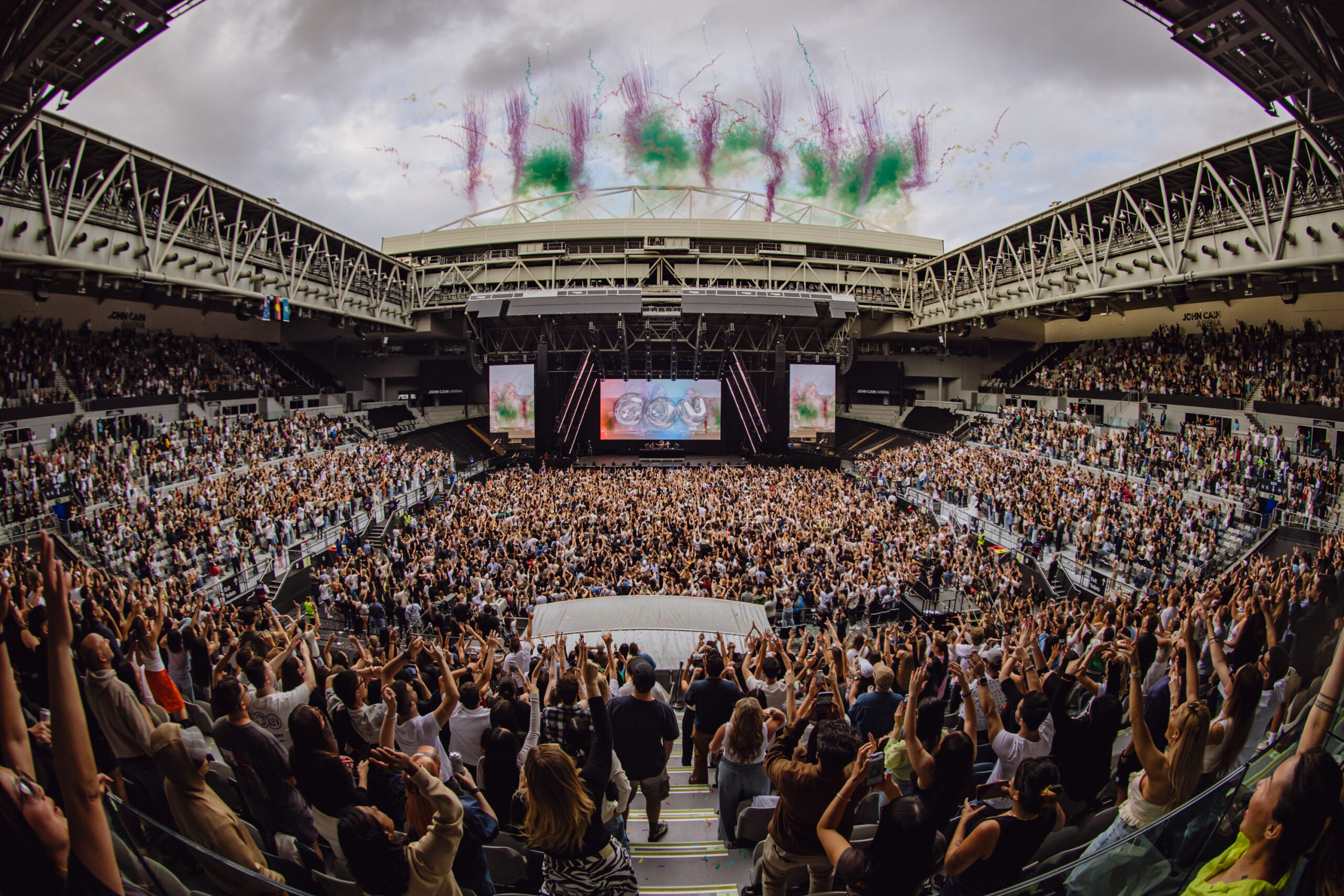
Despite the 5:30 pm slot, the crowd brought a palpable intensity from the outset. John Cain Arena proved to be an inspired choice for the occasion, its sheer capacity allowing thousands of punters to converge. It created a unique cross-pollination of cultures, merging the dedicated electronic music fanbase with the broader tennis crowd in a way that felt cohesive rather than disjointed.
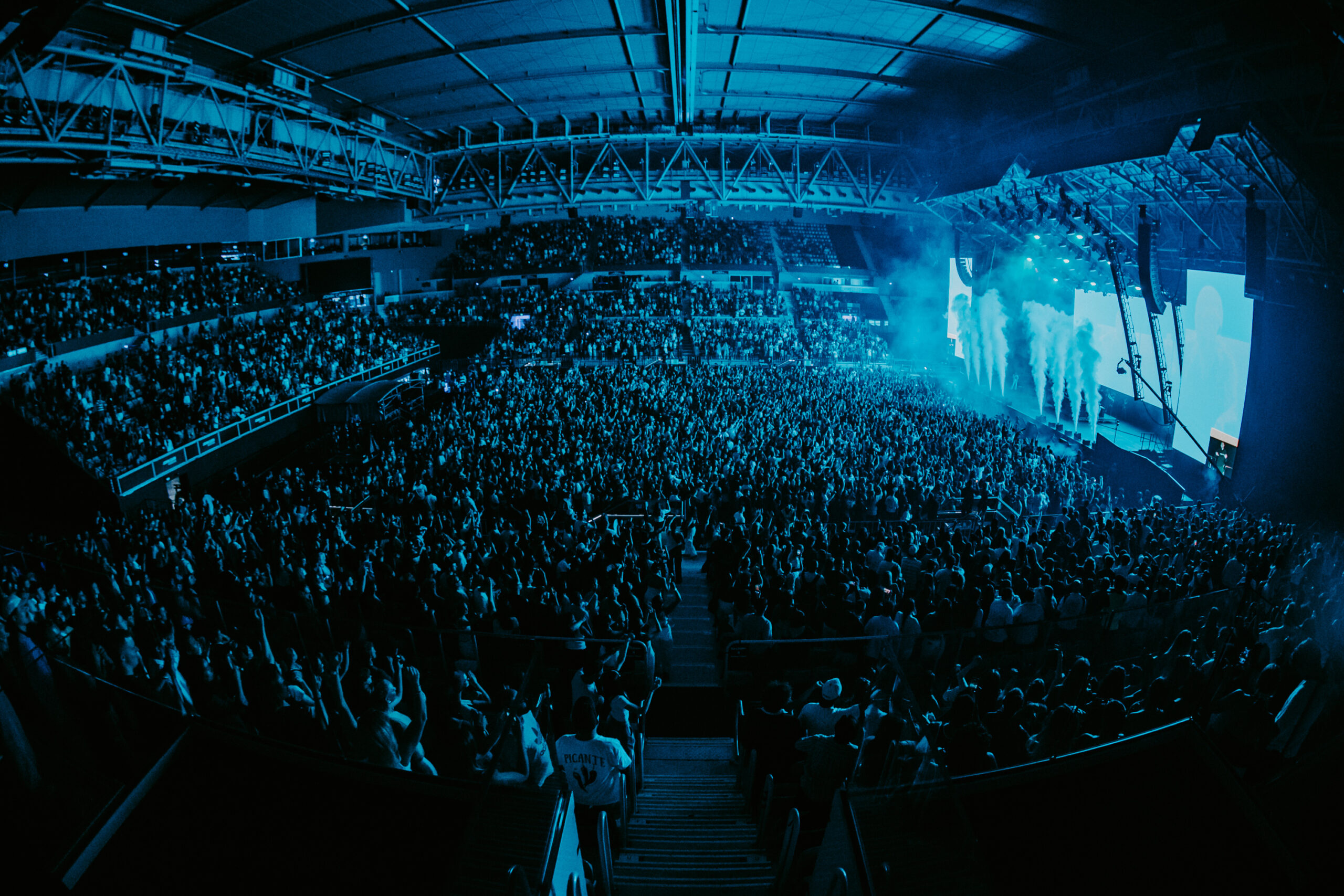
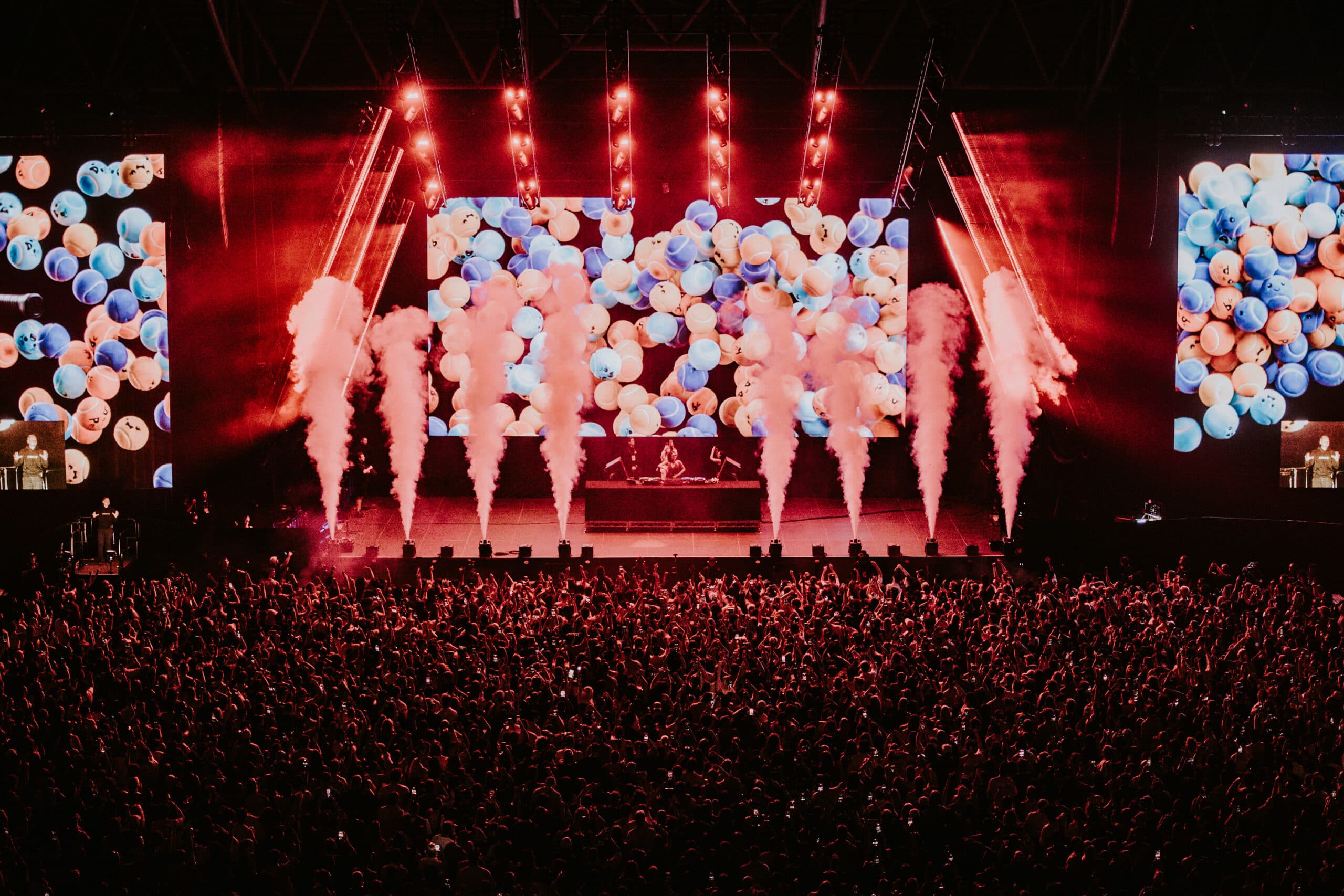
The production took full advantage of the arena’s capabilities, particularly in the set’s first half. With the roof initially closed, the venue was plunged into darkness, allowing Gou’s visuals to take centre stage – which many were specifically tennis themed, adding a special and impressive element. Displayed across high-quality screens, the imagery was sharp and immersive, effectively simulating a late-night club environment in the middle of the afternoon. However, the atmosphere shifted dramatically when the roof was retracted. As sunlight flooded the arena, the mood transformed from a darkened rave to a vibrant day party, offering a contrasting and welcomed sensory shift that energised the room.
Musically, Gou delivered a masterclass in selection. Her set was a dynamic weave of throwback records, deep, unknown cuts that kept the heads nodding, and tasteful commercial moments that anchored the energy. However, the scarcity of her own material was noticeable. She played only one or two of her own productions, relying almost entirely on tracks by other artists. This approach highlights that her transition from DJ to a standalone recording artist is still a work in progress.
Ultimately, Peggy Gou provided a stellar experience that justified the ambitious scale of the event. The inclusion of AO Live is a significant strategic win, elevating the Australian Open beyond a mere tennis tournament and allowing it to stand tall among the world’s premier sporting and entertainment spectacles.